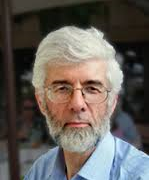
 Dr. David L. Wykes, BSc (Dunelm), PhD (Leicester), FRHistS, is Director of Dr Williams’s Library, and Co-Director of the Dr Williams’s Centre for Dissenting Studies. He gave the second plenary of the Matthew Henry tercentenary (being hosted by the University of Chester, the University of Manchester and the Chester Cathedral Library) on the subject of “Matthew Henry: Minister and Preacher.” He has written more than fifty entries for the Oxford Dictionary of National Biography. Here is his entry on Matthew Henry.
Dr David L Wykes’ DNB entry on Matthew Henry
Dr. David L. Wykes, BSc (Dunelm), PhD (Leicester), FRHistS, is Director of Dr Williams’s Library, and Co-Director of the Dr Williams’s Centre for Dissenting Studies. He gave the second plenary of the Matthew Henry tercentenary (being hosted by the University of Chester, the University of Manchester and the Chester Cathedral Library) on the subject of “Matthew Henry: Minister and Preacher.” He has written more than fifty entries for the Oxford Dictionary of National Biography. Here is his entry on Matthew Henry. Christian public worship ought to be simple. It should not seek to add to the elements warranted by Scripture or to elaborate forms not endorsed by the word. This is just the faithful application of the general biblical principle that we have nothing to add to God’s word that improves it! Moses tells us in Deuteronomy 12:32 that God says: “Everything that I command you, you shall be careful to do. You shall not add to it or take from it.” (Deu 12:32 ESV) and Proverbs 30:6 warns: “Do not add to his words, lest he rebuke…
 What qualities should a public worship service evidence? What ought to be its essential characteristics? With the principles in mind that we have already articulated, let us consider a non-exhaustive list of qualities that we aspire to in biblically-informed and directed congregational services of worship. In biblical public worship, the congregation will offer Scriptural, simple, Spiritual, God-centered, historic, reverent and joyful, mediated, corporate, evangelistic, delightful, active and passive, Lord’s Day worship to the living and…
 Protestants have always believed that how we worship, the manner of our public worship, matters. The main reason for this is because Protestants believe that the Bible itself, in both the Old and New Testaments, commands a number of important things…
 Do you need help with prayer? Many Christians struggle there. Over the centuries, learning to pray the Scriptures has been the best solution to the problem. But where can one find help in learning how to pray Scripture? For the last three hundred…
 The congregation that aims to be biblically directed and informed in its approach to public worship will gather weekly on the Lord’s Day for Bible reading, Bible preaching, Bible praying, Bible singing and biblical observance of the sacraments.…
 Why does a congregation gather on the Lord’s Day? More can be said, but not less than this: our aim, as the congregation gathers to meet with God in public worship on the Lord’s Day, is to glorify and enjoy God, in accordance with his written…
 “All history is subservient to the great work of Redemption” so begins Thomas Chalmers Sabbath Scripture Readings. From October of 1841 to September 20, 1846, Chalmers wrote a series of devotional-expositional thoughts on each chapter of…
 Why do we worship? There is more than one right biblical answer. Surely at the top of the list is “for his own glory” (1 Corinthians 10:31, Psalm 29:1-2). There is no higher answer to “why do we worship?” than because the…